
Once you've decided composite makes sense for your Clearwater deck — see our full composite vs. wood breakdown if you're still weighing that — the next question is which product to actually buy. The marketing from every brand sounds nearly identical, so here's a way to compare them that doesn't rely on taking anyone's word for it.
The First Real Split: Capped vs. Uncapped
This distinction matters more than which brand name is on the box. Capped composite has a protective polymer shell wrapped around a wood-composite core, which dramatically improves resistance to staining, fading, and moisture compared to older uncapped composite, where the core material is exposed on the surface. Uncapped composite is generally cheaper but shows wear — especially UV fading — faster, which is a real consideration under Florida's sun.
For nearly every Clearwater project, we recommend capped composite. The price difference versus uncapped is usually smaller than people expect, and the performance gap in our climate specifically is large enough that it's rarely worth the savings.
Budget, Mid-Tier, and Premium Lines
Budget Composite
Entry-level composite lines are the most affordable way into the material and still outperform wood on maintenance, but they typically carry shorter fade-and-stain warranties — often in the 10 to 25 year range — and a narrower color selection. A reasonable choice for a rental property, a shorter ownership horizon, or the tightest budgets.
Mid-Tier Composite
This is where most Clearwater homeowners land — a meaningful step up in warranty length (often 25 to 30 years), a wider range of realistic wood-grain finishes, and better UV and stain resistance than budget lines, without premium-tier pricing.
Premium Composite
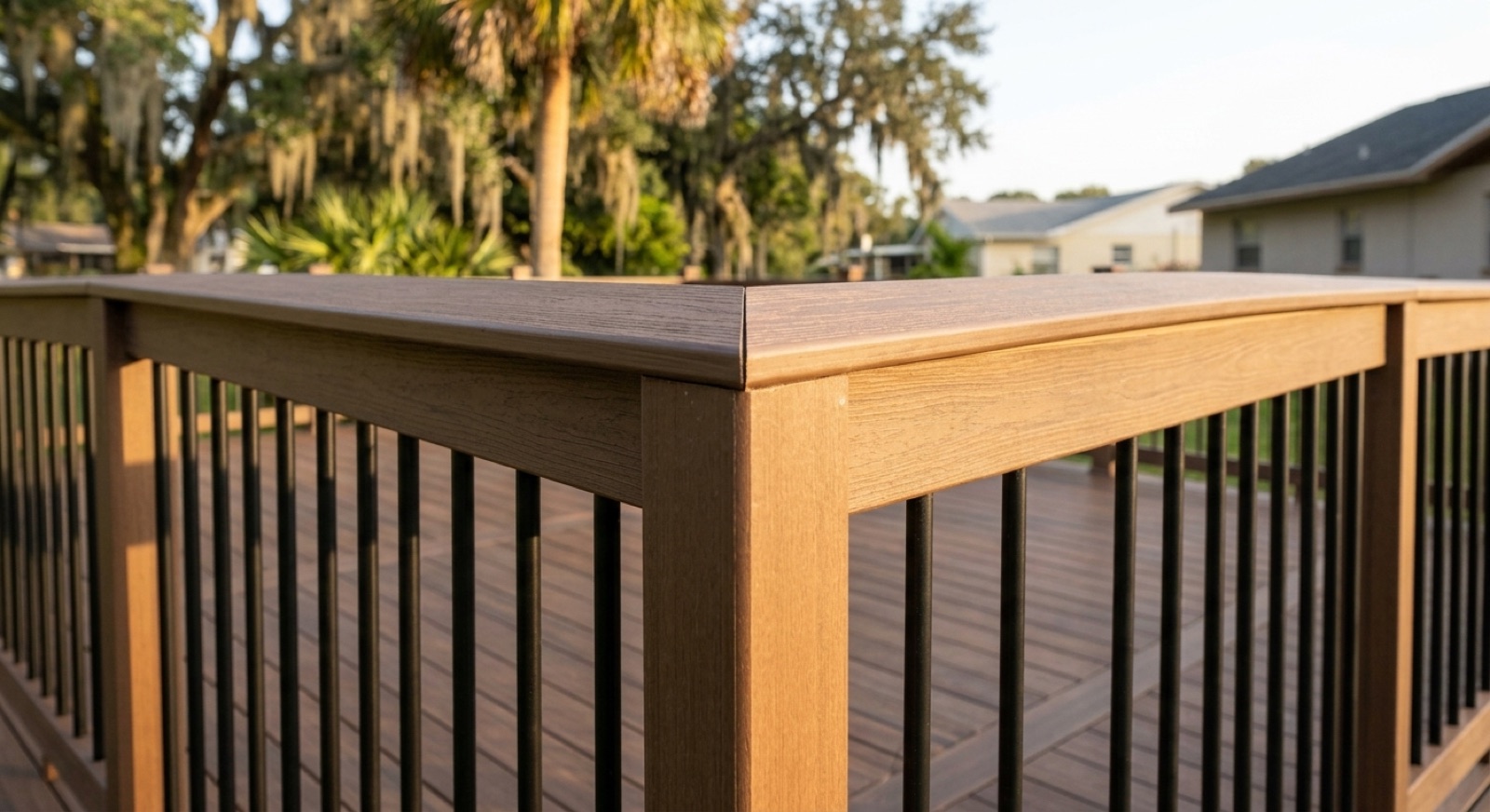
Top lines from Trex and TimberTech carry warranties running as long as 50 years against fading and staining, the most realistic wood-look finishes on the market, and often better heat-management technology that keeps the surface more comfortable underfoot in direct sun — a genuine consideration for west-facing Clearwater decks.
See the Actual Samples Before You Decide
We bring physical composite samples to your home so you can compare them against your siding and hardscape in person.
📞 Call 727-349-3241What Actually Matters for a Coastal Property
If your deck is within a mile or two of the Gulf or Old Tampa Bay, warranty length and UV resistance matter more than they would inland, since salt-laden air and stronger sun both accelerate wear on lower tiers of composite faster than the manufacturer's general climate assumptions account for. This is a bigger factor for properties near Clearwater Beach than for a similar deck built in Countryside or further inland.
Reading a Warranty Before You Trust It
Warranty length is only half the story — what the warranty actually covers matters just as much. Most composite warranties split into a structural warranty (covering rot, insect damage, and manufacturing defects) and a separate, usually shorter, fade-and-stain warranty. A 50-year headline number is often the structural warranty, while the fade-and-stain coverage that actually determines how the deck looks over time might be 25 years on the same product. Reading past the marketing headline to the specific terms — and asking what voids the coverage, since some warranties require using the manufacturer's own approved cleaners — avoids an unpleasant surprise a decade in.
Don't Skip the Substructure Conversation
Whichever tier you choose, remember the composite surface sits on a framed structure that still has to meet Florida's wind-load code and still needs a permit — brand choice doesn't change that requirement, which we cover in the Clearwater permit guide. A premium composite surface on an undersized frame is still a problem; get both parts right.
Making the Final Call
There's no single "best" composite brand — there's a best fit for your budget, how close you are to the water, and how long you plan to own the home. We'll bring actual samples of the tiers that make sense for your project so the decision is based on what it looks and feels like in your yard, not a marketing photo.