
Ask ten Clearwater homeowners why they picked wood or composite and most will point straight to the upfront price. That's a reasonable starting point, but it's an incomplete comparison — the honest answer depends on how long you plan to own the house, how close you are to the water, and how much maintenance you're realistically going to keep up with.
What Each Material Actually Costs to Own
Pressure-treated wood decking material typically runs $4 to $9 per square foot, noticeably less than composite's $6 to $14 per square foot before labor. That gap is real and it's the reason wood remains popular for budget-conscious builds — we cover the full installed pricing picture in our Clearwater deck cost guide.
What that comparison leaves out is the 15-year picture. A wood deck within a few miles of the Gulf typically needs cleaning and resealing every 12 to 18 months, at a real cost each time in both money and a weekend of your time. Composite needs essentially none of that. Multiply a modest resealing cost by roughly ten cycles over 15 years and the total cost of ownership gap between wood and composite shrinks substantially — sometimes disappearing, depending on how diligent you'd actually be about maintenance.
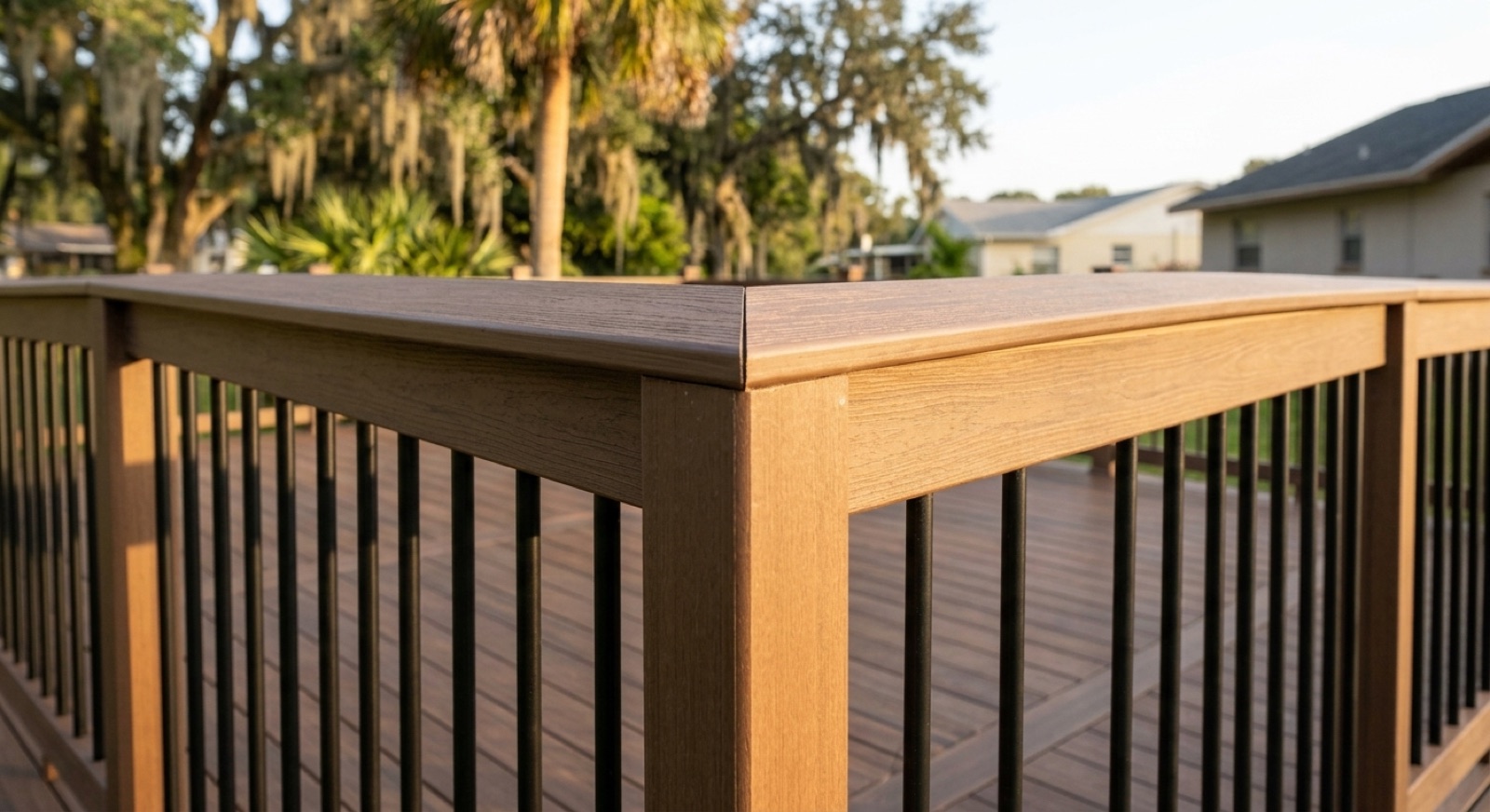
How Each Material Handles Clearwater's Specific Climate
Humidity and Rot
Florida's humidity is relentless, and wood — even pressure-treated wood — absorbs moisture and can develop rot or mold over time if drainage and airflow underneath aren't handled correctly during construction. Composite doesn't absorb water the same way, which removes an entire failure mode wood decks deal with here.
UV and Fading
Both materials fade under Florida's sun, but they age differently. Wood grays and needs refinishing to look fresh again. Capped composite is engineered to resist UV fading far better, which is why premium lines carry warranties running decades against exactly that.
Salt Air
This is where the two materials diverge the most. Properties near Clearwater Beach or any open water see salt-laden air accelerate wood decay and, just as importantly, corrode standard fasteners faster than they would inland. Composite paired with marine-grade hardware handles that exposure with far less degradation, which is why we lean toward composite almost by default on barrier-island projects covered in our composite & Trex decks service.
Not Sure Which Material Fits Your Project?
We'll walk your yard and give you real numbers for both — no pressure toward the pricier option.
📞 Call 727-349-3241When Wood Still Makes Sense
Wood remains the right call for homeowners on a tighter upfront budget, for properties well inland where salt exposure is minimal, or for anyone who genuinely doesn't mind — or even enjoys — the seasonal upkeep. It's also easier to repair in sections, since replacing a few boards on a wood deck is usually simpler than color-matching an aging composite product years later.
When Composite Wins Outright
For barrier-island and immediate-waterfront properties, rental or second homes where nobody's around to keep up a resealing schedule, and anyone planning to stay in the house long enough to recoup the higher upfront cost through avoided maintenance, composite is the stronger long-term choice. If you're deciding between brand tiers once you've settled on composite, our decking brand comparison breaks down capped versus uncapped and budget versus premium lines in plain language.
A Middle Path: Wood Framing, Composite Surface
It's worth knowing that most composite decks aren't composite all the way down — the substructure underneath is typically pressure-treated wood framing regardless of what decking material sits on top, since composite doesn't have the structural strength to serve as joists and beams. That means the material choice you're really making is about the surface you walk on and see, not the entire deck. It's also why re-decking an existing sound wood-framed structure with a composite surface later is often realistic, giving you a lower-cost path to try wood first and switch the surface down the road if maintenance becomes a hassle.
The Resale Angle
Buyers touring a Clearwater home rarely ask what decking material is underfoot, but they do notice condition — a wood deck that's overdue for resealing reads as deferred maintenance, while a composite deck of any age tends to look presentable with minimal effort from a seller. If you're renovating with a sale in the next several years in mind rather than decades of personal ownership, that presentation gap is worth weighing alongside the raw cost numbers above.
There's no universally correct answer here — only the right answer for your specific property, budget, and how long you're planning to stay. We'll walk through both scenarios with real numbers during a free, no-obligation estimate.