
Composite decking's biggest selling point is how little it demands from you, and that's genuinely true compared to wood. But "low-maintenance" gets misread as "zero-maintenance" often enough that we want to be specific about the actual routine — it takes about 20 minutes a season, not zero, and skipping it entirely does shorten how good the deck looks over time.
What Composite Actually Needs
A Quick Rinse, Monthly
A garden hose rinse once a month clears pollen, dust, and the fine sand that blows in off the Gulf before it has a chance to grind into the board texture underfoot. This alone prevents most of the dulling people mistake for fading.
A Real Cleaning, Seasonally
A few times a year — more often near Clearwater Beach or any open water — a soap-and-water scrub with a soft-bristle brush handles everything a rinse doesn't: pollen buildup, mildew spots in shaded areas, and salt residue on waterfront properties. Most composite manufacturers sell a dedicated cleaner for tougher spots, and using it as directed matters more than reaching for whatever's under the sink.
Mildew in Shaded Corners
Composite doesn't rot, but organic buildup — pollen, leaf litter, algae — can develop a mildew film in shaded, poorly-ventilated corners, especially under furniture that never moves. A composite-safe cleaner and a bit of scrubbing clears it; letting it sit for a season makes the job harder, not impossible.
What Composite Does Not Need
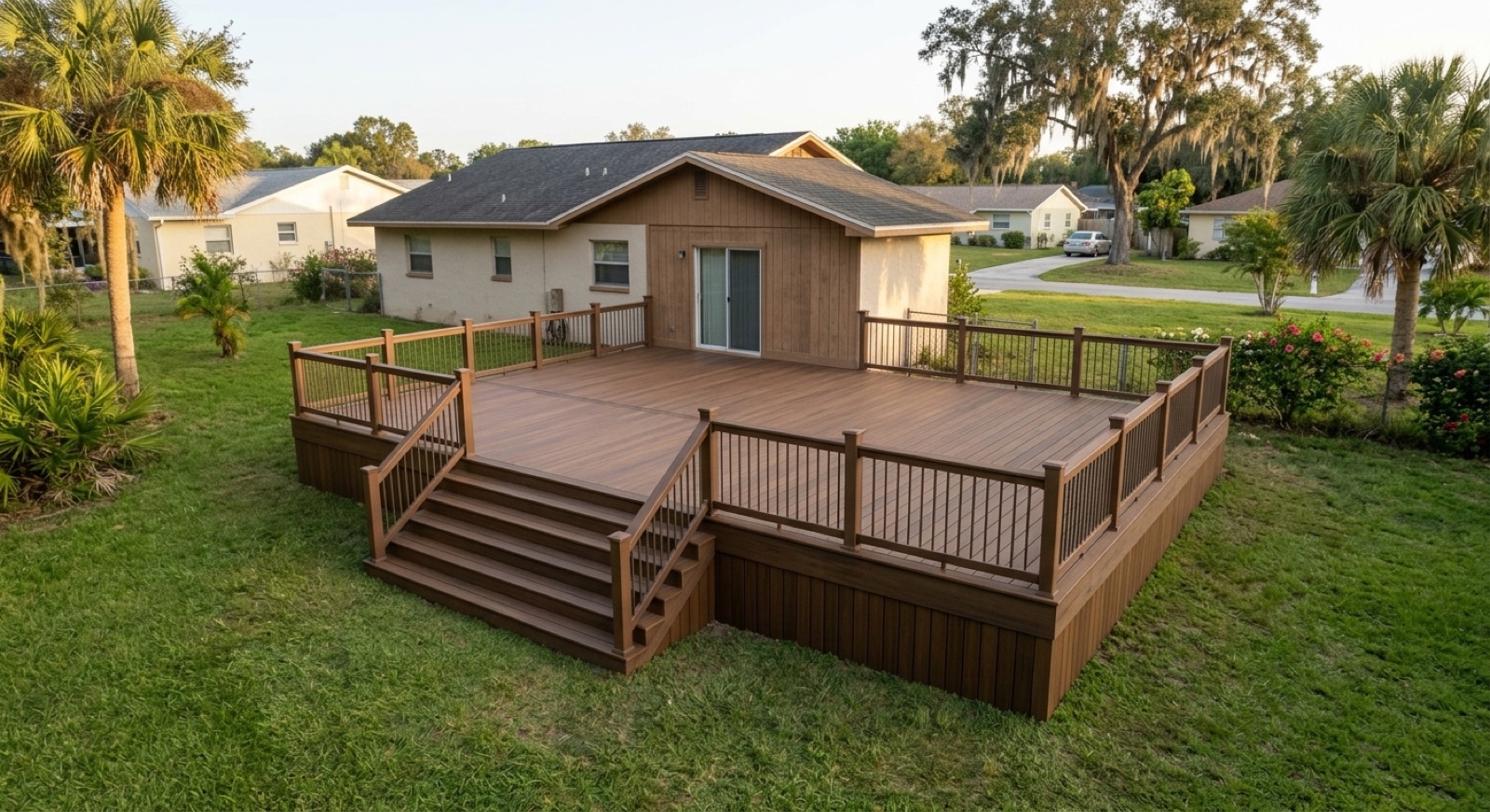
No sanding, no staining, no annual sealant application — the entire maintenance category that dominates wood deck ownership simply doesn't apply. If you're still deciding between materials, our composite vs. wood comparison covers the full 15-year cost picture including this exact maintenance gap.
What to Actually Reach For (and What to Avoid)
Dish soap and warm water handle the majority of composite cleaning needs, applied with a soft-bristle push broom or brush rather than anything abrasive. For tougher spots — grease from a grill, tannin stains from leaves left sitting too long, or salt film near the water — a cleaner made specifically for composite decking works better than a general-purpose deck cleaner, since some all-purpose products contain chemicals that can dull a composite board's protective cap over repeated use.
Pressure washers are where a lot of composite decks get damaged by well-meaning owners. Too much pressure, or a nozzle held too close to the surface, can etch or streak the cap layer permanently. If you use one, keep it on a wide fan setting, hold it well back from the boards, and test an inconspicuous spot first — or just skip it in favor of a hose and a brush, which handles nearly everything a composite deck needs anyway.
Furniture and Rugs
Outdoor rugs and furniture with non-breathable feet can trap moisture against composite boards, which is one of the few ways mildew gets a foothold on an otherwise low-upkeep surface. Rotating furniture occasionally and choosing rugs designed for outdoor airflow avoids the issue entirely.
How This Actually Compares to a Wood Deck's Routine
Put a number on it and the difference is stark: a wood deck near the coast typically needs a full day of cleaning and resealing every 12 to 18 months, plus periodic spot repairs as boards weather unevenly. A composite deck's entire annual maintenance is closer to a handful of 20-minute sessions — a monthly rinse and a seasonal scrub — with no resealing step at all. Over a decade of ownership, that's the difference between roughly seven or eight full maintenance days and maybe two full days total, which is the real-world case for composite beyond just the marketing language.
Considering Composite for Your Next Deck?
We'll bring samples and walk through brand and color options during a free, no-obligation estimate.
📞 Call 727-349-3241Pool Decks Need a Slightly Closer Eye
Composite around a pool deals with sunscreen residue and pool chemicals in addition to everything above, so a slightly more frequent rinse schedule is worth it there — we cover pool-specific material and maintenance considerations in our pool deck materials guide.
The Bottom Line
Twenty minutes a season is the realistic commitment for a composite deck in Clearwater's climate — a monthly rinse, a seasonal scrub, and some attention to shaded corners and furniture placement. Compare that to the sanding-and-staining cycle a wood deck needs every 12 to 18 months this close to the Gulf, and it's easy to see why composite has become the default recommendation for most of our composite & Trex deck clients.