
A deck that surrounds a pool spends its life wet, chlorinated or salt-treated, covered in sunscreen residue, and walked on barefoot — conditions a standard backyard deck never sees. Building one is less about picking a pretty material and more about picking one that performs under those specific, repeated stresses.
Slip Resistance Is Non-Negotiable
Wet decking around a pool is one of the more common sources of home injuries, which is why slip resistance should be the first filter you apply to any material, not an afterthought. Quality composite decking is manufactured with a textured surface engineered specifically to stay grippy when wet, and it's what we recommend for the overwhelming majority of pool decks we build. Smooth, polished, or heavily sealed wood surfaces are the opposite of what you want here.
Heat Underfoot
Florida sun on a pool deck means bare feet meeting hot decking, often repeatedly over a single afternoon. Lighter-colored composite stays noticeably cooler than dark composite or unfinished concrete in direct sun, and some premium composite lines are specifically engineered with heat-reflective technology for exactly this use case. If your pool deck gets full afternoon sun with limited shade, color choice matters more here than almost anywhere else on the property.
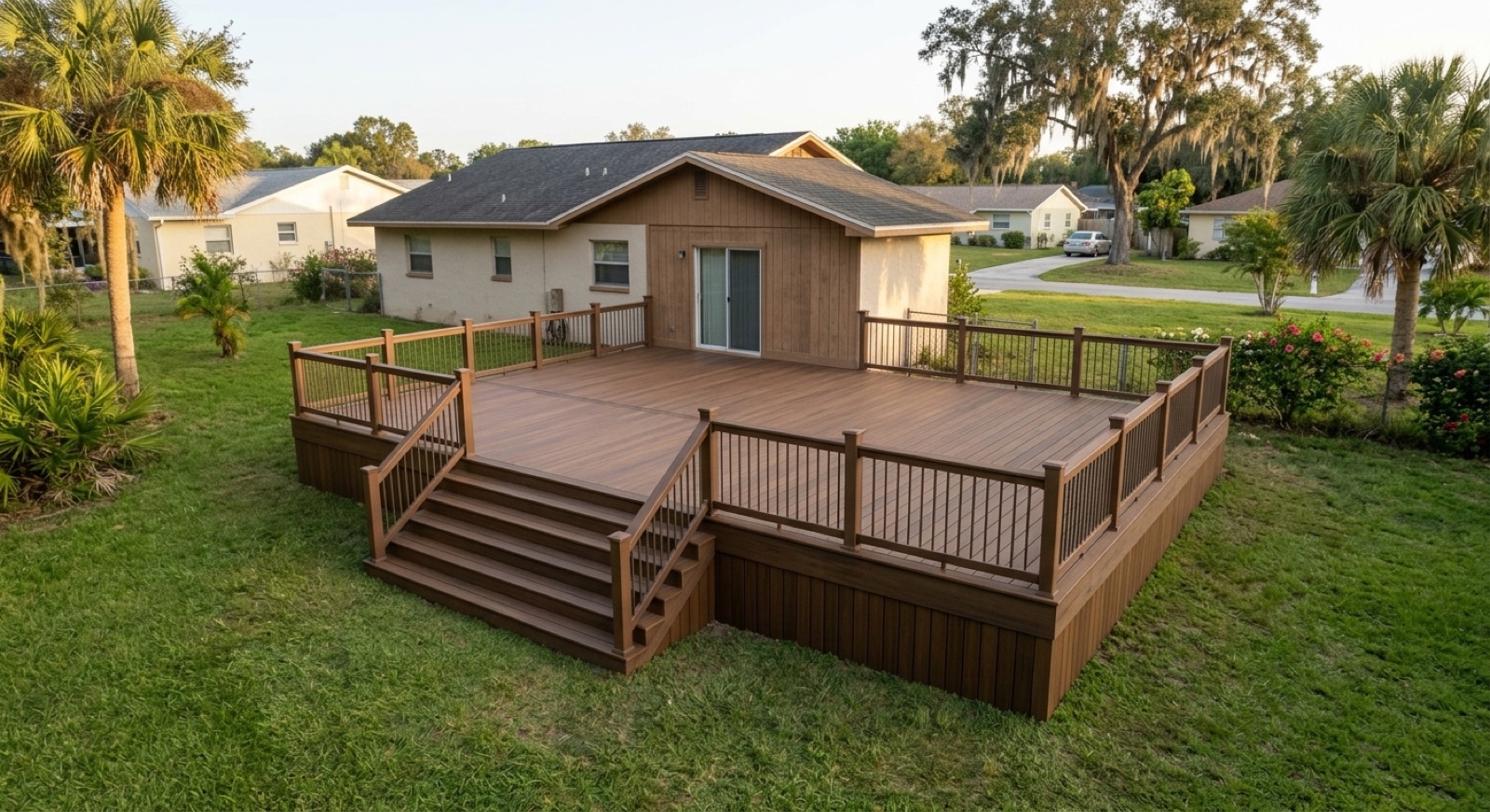
Drainage and Board Spacing
A pool deck needs to shed water fast — both from splashing and from Florida's frequent downpours — without letting standing water sit against framing or hardware. We size board gaps and slope the substructure specifically for constant moisture exposure, which is different from how we'd frame a standard deck that only deals with rain.
Pool-Barrier Code Basics
Florida requires a barrier around residential pools — typically a fence, wall, or screen enclosure at least 48 inches tall with self-closing, self-latching gates — and any deck design has to work with that requirement rather than create a gap in it. If your pool deck ties into a screened lanai, the enclosure itself often satisfies part of the barrier code, which is one more reason we design the deck and any enclosure as one coordinated project. Our screened porches & lanais page covers how that combination typically comes together.
Planning a Pool Deck or Renovation?
We'll assess your pool, sun exposure, and existing enclosure and recommend the right material — free, no obligation.
📞 Call 727-349-3241Wood Around a Pool: When It Still Works
Properly treated and finished wood can work around a pool, particularly on inland properties without heavy salt exposure, but it demands more frequent resealing than a standard deck because of the constant water contact — closer to an annual schedule than the 12 to 18 month cycle we typically recommend elsewhere. Most homeowners find composite's near-zero maintenance a better fit specifically for this application, even if they've chosen wood elsewhere on the property.
How Pool Decking Compares to Concrete and Pavers
Concrete and pavers are common pool-deck alternatives, and each has a real place. Stamped or textured concrete is durable and often the least expensive option upfront, but it can crack over time as the ground shifts, and dark colors get genuinely too hot to walk on barefoot in direct summer sun. Pavers handle ground movement better than poured concrete since individual units can shift without cracking, and they're relatively easy to replace if one gets stained or damaged — but both concrete and pavers sit lower to the ground and don't offer the elevation flexibility a framed deck does for pool designs that need to step up or down to match a patio or lanai.
A raised composite or wood deck makes the most sense when the pool needs to tie into an elevated patio, lanai, or a sloped yard; concrete or pavers often make more sense for a simple at-grade pool surround with a flat, uniform yard. We'll walk through which fits your specific layout during a free estimate rather than defaulting to one material for every project.
Elevation and Setback Considerations
Pool decks near the water, including properties around Clearwater Beach and Safety Harbor's bayfront lots, often deal with flood-zone elevation requirements on top of standard pool-barrier code — a combination we cover in more depth in our multi-level & pool decks service. Getting both right from the design stage avoids costly changes mid-permit.
A pool deck is one of the areas where cutting a corner on material or drainage shows up fastest — usually within the first rainy season. Building it right the first time, with the material actually suited to the job, costs less than fixing it after the fact.